Key Takeaways:
- Depending on disconnected tools results in inefficiencies, integrated platforms optimize operations and enhance complete control.
- These three pillars ensure seamless job management, correct workforce tracking, and consistent service delivery.
- Access to live information helps managers track performance, solve issues faster, and maintain operational efficiency.
- Features such as automated timesheets, digital forms, and alerts minimise manual work as well as eliminate common mistakes.
- By enhancing efficiency, compliance, and coordination, the right solution allows cleaning businesses for expanding with confidence.
Overview – The Evolving Landscape of Cleaning Business Operations in the UK
Handling a cleaning business in the UK requires more than just manpower; it needs structured systems, instant visibility, and accurate reporting. As the industry evolves, operations are becoming increasingly complex, with businesses handling multiple sites, large teams, and stricter client expectations. Depending on manual tools such as spreadsheets, paper records, or messaging applications, which result in inefficiencies, miscommunication, and missed tasks.
These traditional methods do not provide real-time insights, nor do they make it complex to maintain accountability and consistency across operations. As a result, several businesses are now moving towards digital solutions for optimizing workflows and enhancing overall efficiency. Adopting accurate cleaning business management software in the UK enables companies to centralize workflow, track performance in real-time, and ensure compliance with industry standards.
A smart software provides the control, visibility, and scalability required for growing and managing cleaning operations effectively.
Why Generic Tools Fail Cleaning Businesses?
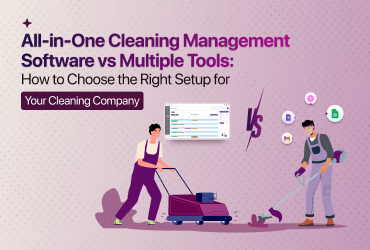
Using disconnected tools creates more issues than they actually solve. Several cleaning businesses depend on a mix of spreadsheets, paper records, and messaging apps for handling everyday operations. While these tools may seem convenient in the first place, they are not able to support the evolving demands of modern cleaning businesses.
- No Real-time Visibility: Managers lack immediate insight into staff location, job progress, and task completion, making it easy for keeping a check on operations effectively.
- Data Scattered Across Systems: Information is spread across several tools, resulting in duplication, confusion, and time wasted looking for crucial data.
- Manual Error and Missed Jobs: Depending on manual updates, it increases the chances of scheduling conflicts, incomplete reports, as well as overlooked or ignored tasks.
- Compliance Risks: Without proper digital records as well as audit trails, maintaining compliance with the standards of the industry becomes challenging and risky.
As the cleaning businesses scale, these inefficiencies only increase, affecting productivity and quality of service.
The 3 Core Pillars of Cleaning Business Software
Every effective system is built on three essential operational layers. To operate a cleaning business efficiently, it is not enough to handle tasks in isolation. Operations should be connected via a structured system that ensures seamless coordination between execution, planning, and reporting. This is where the main pillars of cleaning business management software play a vital role, building the base of streamlined and scalable operations.
🔶 Forms
Digital forms allow teams to capture job details, finish checklists, and submit reports instantly. This ensures transparency, consistency, and proper documentation for each completed task.
🔶 Attendance
This pillar offers real-time visibility into the activity of the staff, involving check-ins, check-outs, and time spent on each task. It enhances accountability, decreases time theft, and ensures correct workforce tracking.
🔶 Scheduling
Scheduling ensures that jobs are accurately assigned, resources are efficiently allocated, and teams are deployed to the correct locations at the correct time. It prevents overlaps, last-minute confusion, and missed jobs.
Core Features That Power Efficient Cleaning Business Operations
The important features are the backbone of efficient cleaning operations, allowing cleaning businesses to optimize scheduling, handle workforce activity, capture real-time data, as well as maintain full visibility and control across all jobs, team as well as client interaction.
🔷 Smart Job Scheduling & Assignment
Effective scheduling ensures zero job is duplicated or missed. Handling several cleaning jobs across various locations can become overwhelming faster without a structured scheduling system. Automated job scheduling helps in simplifying processes by enabling managers to assign tasks faster and more accurately. With drag-and-drop functionality, operations can be scheduled in seconds; while recurring templates enable automating regular assignments, saving both time and effort.
Specialized scheduling features also prevent conflicts such as double bookings or shift overlaps, ensuring seamless operations. Additionally, the ability to manage multi-location and multi-site schedules from a single system provides full operational control, especially for businesses serving several clients.
➡️ Why It Matters
An efficient scheduling system significantly reduces administrative workload and eliminates manual coordination. It ensures jobs are properly assigned and completed on time, allowing businesses to operate efficiently and deliver consistent, high-quality service.
🔷 Real-Time Workforce Visibility & Attendance Tracking
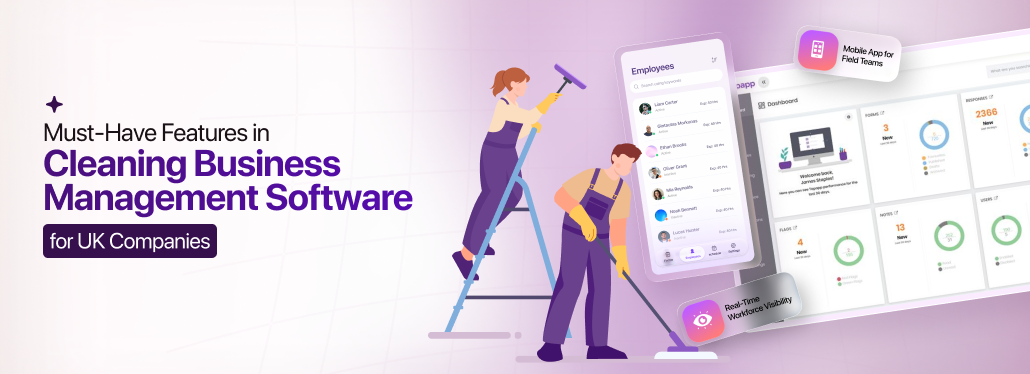
Knowing where your team is working at all times is essential. Handling field teams without real-time visibility can result in delays, inefficiencies, and a lack of accountability. Real-time workforce tracking enables managers to monitor staff activity as it occurs. This ensures that the teams are present at the assigned job locations and finish the tasks as scheduled. GPS-based check-in and check-out features offer correct location data, while geo-verification ensures that the employees are clocking in from the accurate job site.
With real-time monitoring, managers get immediate insights into workforce availability and the progress of the job. Automated timesheets further help in simplifying operations by capturing the working hours directly from attendance data, eliminating the requirement for manual entry.
➡️ Why It Matters
This level of visibility helps in removing the dependence on manual timesheets and decreases the risk of time fraud. It also enhances accountability across teams, making sure that every job is tracked correctly and done efficiently, resulting in better operational control and service delivery.
🔷 Automated Timesheets & Payroll-Ready Data
Manual payroll processes result in disputes and errors. Handling payroll manually can be time-taking and prone to accuracies, mainly when handling multiple employees across various job sites. Automated timesheets streamline this process by capturing work hours directly starting from attendance data, ensuring consistent and accurate records. With payroll-ready data exports, businesses can easily transfer information for processing without the requirement for manual calculations.
Moreover, features such as overtime tracking and detailed attendance logs offer a clear breakdown of employees’ work hours, making payroll more transparent and trustworthy. Audit trails further improve accuracy by maintaining a verifiable record of all time entries and changes.
➡️ Why It Matters
Automation largely decreases payroll errors as well as eliminates the requirement for repetitive administrative tasks. It saves crucial time for managers as well as ensures employees are properly paid. Most significantly, it supports compliance by maintaining organized records that are important for audits and regulatory needs.
🔷 Digital Forms, Checklists & Inspections
Paper-based reporting is trustworthy and inefficient. Depending on paper forms for everyday operations mostly results in lost records, incomplete data, and delays in reporting. Digital forms streamline this process by enabling cleaning teams to capture and submit information in real-time. With a custom form builder, businesses can develop tailored checklists, inspection forms, and audit reports that align with their service needs.
Features such as conditional logic and validation ensure that all needed fields are completed accurately before submission, decreasing errors and maintaining data quality. Task-based checklists also help in standardizing procedures across teams, ensuring all the jobs are completed to the same standard.
➡️ Why It Matters
Digital forms help in eliminating the requirement for paperwork and manual data entry, saving time and decreasing operational inefficiencies. They ensure consistency in service delivery, enhance accuracy, and offer trustworthy documentation, helping businesses maintain high-quality standards as well as meet compliance needs with ease.
🔷 Real-Time Reporting & Instant Data Access
Decisions should rely on real-time insights and not delayed reports. In a fast-paced cleaning business, waiting for end-of-day or weekly reports can slow down decision-making and impact service quality. Real-time reporting helps ensure that the managers have instant access to crucial operational data as it happens. With immediate report generation, teams are capable of submitting updates directly from the field, eliminating delays and manual consolidation.
Real-time dashboards offer a clear overview of continuous operations, including job completion status, team performance, and any pending tasks. This level of visibility enables managers to find out issues faster, reassign resources if required, and ensure that all the jobs are completed on time.
➡️ Why It Matters
Access to real-time data allows faster and more informed decision-making. It enhances operational control by offering continuous visibility into the activities of the business and helps in maintaining a high service standard. Ultimately, it enables cleaning businesses to respond proactively instead of reactively, ensuring reliable and consistent performance.
🔷 Proof of Work & On-Site Data Capture
Clients expect transparency and verifiable service delivery. In the cleaning industry, simply finishing a job is not enough; clients require clear proof that work has been carried out to the needed standards. Proof of work features allow teams to capture as well as share real-time evidence directly from the site of the job. With photo capturing, staff can document completed tasks, while digital signatures enable clients or supervisors to confirm job completion immediately.
Additional inputs, such as notes and annotations, offer context, helping in explaining any issues, special requests, or completed actions. Time-stamped job records further strengthen accountability by recording exactly when the tasks were performed.
➡️ Why It Matters
These capabilities develop trust by offering complete transparency into the service delivery. They also help in decreasing disputes by offering verifiable records of completed work. Majorly, they ensure accountability across teams, which makes it easier for businesses to maintain standards and demonstrate consistent performance to clients.
🔷 Mobile Accessibility for Field Teams
Cleaning teams work on-site, so their software needs to support mobility. Since cleaning happens in the field, teams need tools that work smoothly on mobile devices. With a dedicated mobile app, staff can get job assignments, update task status, and access important information right from their phones. Job notifications keep teams instantly informed about new assignments or schedule changes, which helps reduce delays and miscommunication.
Real-time updates help managers stay informed about job changes, and field staff can report issues or finish tasks without needing to go back to the office. Offline features also let work continue smoothly, even in places with little or no internet. Data will sync automatically when the connection returns.
➡️ Why It Matters
Mobile accessibility keeps the teams connected and aligned at all times. It allows real-time execution of tasks, decreases dependency on manual communication, and largely enhances complete productivity and efficiency in field operations.
🔷 Centralised Dashboard & Unified System
Handling multiple tools creates inefficiencies; centralisation is primary. Utilizing separate systems for attendance, scheduling, and reporting mostly leads to fragmented data and operational confusion. A centralised dashboard brings all necessary functions into a single platform, giving managers a full overview of operations in real-time. With all data connected across modules, businesses can access correct information without switching between several tools.
Real-time synchronisation ensures that updates in attendance, scheduling, and forms are immediately reflected across the system, keeping everyone aligned. A single login system simplifies access, enabling teams to handle tasks efficiently without dealing with several platforms or credentials.
➡️ Why It Matters
Centralisation helps in eliminating data silos and decreases the risk of communication and duplication. It enhances complete efficiency by optimizing workflows and saving time. Majorly, it simplifies management, allowing cleaning businesses to operate with greater control, clarity, and consistency across all operations.
🔷 Notifications, Alerts & Real-Time Communication
Delays in communication can disturb workflows or operations. Effective communication is important for handling cleaning teams across several sites and schedules. Without a structured approach, crucial updates can be missed, resulting in delays and operational inefficiencies. Notifications and alerts ensure that both the managers and the field staff stay informed in real-time. Automated alerts can notify teams about schedule changes, new assignments, and urgent updates, decreasing the requirement for manual follow-ups.
Job notifications keep staff aware of their tasks and any modifications, while attendance alerts help the managers in monitoring the check-ins, missed shifts, or late arrivals. System updates further make sure that all users are always aligned with the latest data.
➡️ Why It Matters
Real-time communication decreases the chances of missed instructions and miscommunication. It keeps teams aligned, enhances coordination, and ensures that the tasks are executed on time. This results in seamless operations, better time management, and more trustworthy delivery of service.
🔷 Role-Based Access & Team Management
Several stakeholders require different levels of access. In a cleaning business, not every team member needs the same level of access to the system. Role-based access ensures that users can only view and manage information that is relevant to their responsibilities. Administrators can oversee operations, access reports, and assign tasks while field staff can focus on job updates as well as job completion without the not needed data exposure.
The structured access control also helps in extending to the client-level visibility, enabling businesses to share specific information with clients without compromising internal data. Controlled data sharing ensures that sensitive data stays secure while still allowing transparency where required.
➡️ Why It Matters
Role-based access enhances data security by restricting unauthorized access and decreasing the risk of misuse of data. It also increases accountability, as actions can be tracked depending on the user roles. All over, it helps in optimizing management by developing a clear hierarchy, making operations more efficient, organized, and secure.
🔷 Data Export, Compliance & Audit Readiness
Compliance is not negotiable for UK cleaning companies. Maintaining accurate records as well as meeting regulatory needs is important for cleaning businesses operating in the UK. A trustworthy system should make it easy to store, access, and export data whenever required. With export options like CSV, Excel, and PDF, businesses can quickly generate reports for internal reviews, regulatory purposes, or client sharing.
Secure record storage ensures that all operational information, like attendance logs, jobs reports, and inspection records, is maintained safely and seamlessly retrievable. Compliance-ready logs as well as comprehensive audit trails offer a clear history of activities, helping businesses track changes as well as verify actions when needed.
➡️ Why It Matters
These features help in simplifying the audit process by keeping all the needed documentation accessible and organised. They ensure legal compliance by maintaining verifiable and accurate records, while also decreasing operational risk associated with incorrect or missing data.
Signs You’ve Chosen the Right Software
The right cleaning business management software should simplify everyday operations, decrease complexity, and enhance overall efficiency, allowing better visibility, control, and coordination across tasks, teams, and processes, without adding unwanted complications to your workflow.
▶️ Reduced admin workload
An effective system helps in automating repetitive tasks such as reporting, scheduling, and timesheet management, majorly decreasing manual effort. This enables managers to focus on strategic decisions rather than spending hours handling routine administrative work.
▶️ Real-time operational visibility
The right software offers immediate insights into job progress, staff activity, and overall performance. With real-time data, managers can find out issues, make informed decisions, and ensure seamless day-to-day operations without delays.
▶️ Improved team accountability
When staff activities are tracked accurately via the system, it promotes responsibility and transparency. Teams are more likely to maintain schedules, complete tasks accurately, and maintain consistent performance across all assigned locations and jobs.
▶️ Fewer errors and missed jobs
Automation and centralized data decrease the risk of human errors, overlooked tasks, and scheduling conflicts. This helps in ensuring that all the jobs are completed as per the plan, enhancing service trustworthiness and complete client satisfaction.
Conclusion
Choosing the right cleaning business management software is necessary for optimizing operations, enhancing efficiency, as well as maintaining a consistent quality of service. With proper features in place, businesses can eliminate manual processes, get real-time visibility, and ensure improved coordination across tasks and teams. As the industry is growing, depending on disconnected tools is not sustainable anymore.
Tapapp is an all-in-one solution that brings scheduling, attendance, and reporting into a single, centralised platform, helping cleaning businesses in streamlining operations, enhancing accountability, and scaling with confidence.